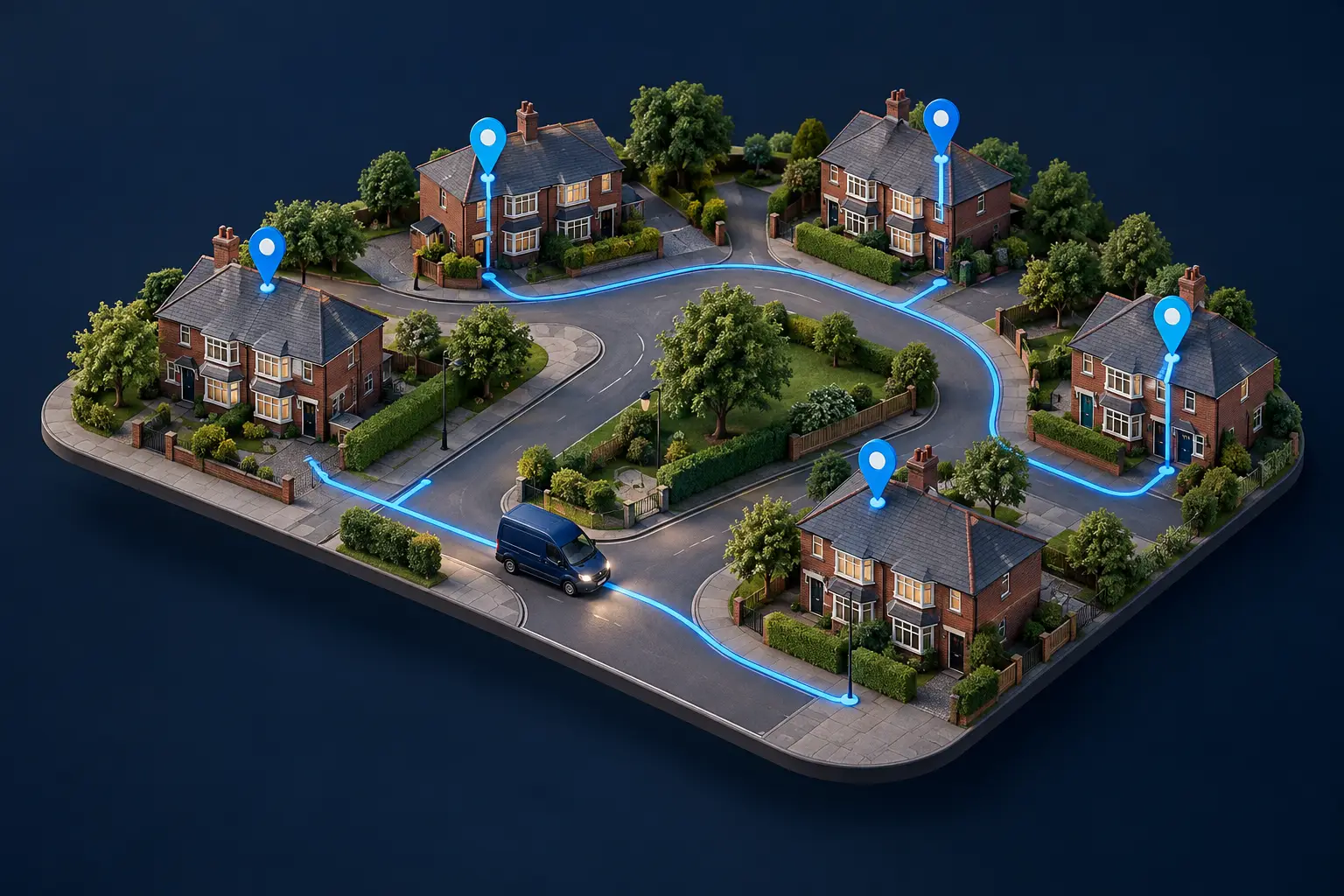
A window cleaner canvassing service is not about collecting random enquiries from all over town. It is about putting recurring domestic customers into the parts of your round where they make commercial sense. When homes are close together, you spend less time driving, more time cleaning and get more value from every working day.
For many window cleaners, the issue is not whether there is demand. It is finding the time to knock doors, explain the service, take details and follow up while still keeping current customers happy. Door-to-door canvassing gives you a practical way to add work without handing over your cleaning hours to prospecting.
What a window cleaner canvassing service does
A professional canvassing service works in the residential areas you choose and speaks with householders directly. The aim is clear: secure repeat-service sign-ups for your window cleaning round.
This is different from paying for broad advertising and hoping suitable leads appear. You can choose an estate where you already have customers, a neighbouring street that would tighten an existing round, or an area where you want to establish a new one. The canvassing activity is focused on getting recurring customers in that location.
That local focus matters. A customer ten minutes away may look useful on paper, but regular travelling soon eats into the value of the job. A handful of houses on the same road can be worth far more because they fit around the work you already do.
Why recurring sign-ups matter more than enquiries
A one-off enquiry is only a possibility. A recurring sign-up is a customer who has agreed to regular window cleaning, giving you a clearer route to predictable income.
For an independent cleaner, that consistency helps with day-to-day planning. You know where you are working, when customers are due and roughly what the round will bring in. It also gives you a stronger base to build from when weather, cancellations or quieter periods affect the diary.
The quality of a new customer depends on more than the price they agree to pay. A good fit is someone within your chosen working area, happy with your service frequency and able to be added to a sensible route. This is why a local, targeted canvassing approach is usually more useful than chasing every lead that comes in.
Build density before chasing distance
A full diary is not always an efficient diary. If your work is spread across several villages or opposite ends of a town, you can be busy without earning as well as you should. Fuel, vehicle wear and unpaid time between jobs all reduce what is left at the end of the day.
Customer density changes that calculation. Adding properties near existing work can reduce gaps in the round and make each visit more productive. It may also make it easier to handle reschedules after poor weather, because you are not spending the day travelling between isolated jobs.
There are times when opening a new area makes sense. Perhaps you are moving your business, covering a location with strong demand or building a separate round for another member of the team. In that case, the priority is not filling every spare hour immediately. It is gaining enough customers in a compact area to make regular visits worthwhile.
A window cleaner canvassing service should support either approach. You decide whether the immediate goal is to fill gaps near existing customers or begin building a round from the ground up.
How the process works in practice
The first decision is the area. Be specific where possible. A postcode sector, housing development, group of streets or estate is more useful than saying you want customers anywhere in a large town. Think about where you already work, where you would like to work and which locations are practical on your usual route.
Next comes the offer you want residents to hear. Most householders want a straightforward explanation: who will clean their windows, how often the service is available and how they can sign up. Clear information builds confidence and avoids time-consuming misunderstandings later.
The canvasser then approaches homes in the selected area and speaks directly with residents. This is a human conversation, rather than an advert competing for attention on a screen. People can ask basic questions and decide there and then whether regular window cleaning would suit them.
Once customers sign up, you can add them to the appropriate round and organise your first clean. The operational work remains yours, so it is worth setting expectations from the start on payment method, access, service frequency and any first-clean arrangement. A properly handed-over customer is easier to retain than one left uncertain about what happens next.
A commercial model that keeps costs clear
Marketing costs can become frustrating when they are disconnected from results. Monthly retainers, minimum campaign spends and long commitments may suit some larger businesses, but they can be difficult to justify when you simply need a few more regular customers in one area.
A performance-focused model is easier to assess. With Route Grow, there is no minimum order and no ongoing monthly charge. You pay a one-off acquisition fee for each customer gained. That means you can start with the number of customers you actually need, whether that is a small addition to an established round or the early stages of a new area.
This does not mean every area will produce customers at the same rate. The type of housing, local competition, household budgets and how well the location fits your service can all affect results. But paying per customer gained gives you a direct way to judge the cost against the recurring value of that customer.
Before choosing an area, work out what a regular customer is worth to your business over a year. Then consider the likely route benefits as well as the cleaning price. A customer beside three existing jobs may be more valuable than one who pays slightly more but requires a separate journey.
When canvassing is likely to suit your business
Door-to-door canvassing is particularly useful when your main obstacle is time. If you know where you want more work but cannot spare evenings or weekends to knock doors yourself, outsourcing that activity lets you stay on the tools.
It can also suit cleaners who are new to an area and do not yet have the local presence that generates recommendations. Rather than waiting for word of mouth to build slowly, you can introduce your service directly to residents in a defined location.
For growing companies, canvassing can help keep a new staff member productive. There is little value in recruiting another cleaner if the work is scattered or not yet there. Building density in advance can give the additional capacity a more solid base.
The approach is less suitable if you have no capacity at all, do not know which areas you can reliably cover or only want one-off jobs. Canvassing works best when you are ready to take on recurring customers and deliver a dependable service once they are secured.
Get the most from every new customer
The best results come from matching canvassing with a clear operational plan. Choose areas close to your current work where possible, and avoid adding properties that create awkward detours just because they are available. Keep your service terms simple and make sure new customers know when they can expect their first visit.
It also helps to keep your records tidy from the first day. Add the address, contact details, agreed frequency, payment preference and access notes straight away. Small admin gaps can turn a promising new sign-up into an avoidable cancellation.
Most of all, treat each new customer as part of a round rather than an isolated job. The real gain is not just another house to clean this week. It is a stronger route that pays repeatedly and gives you more control over how your business grows.
Choose the streets that improve your working day, set a realistic target and build from there. A well-placed customer round can save time every week for years to come.