A full diary is useful. A full diary made up of scattered, one-off jobs is not the same thing as a profitable round. This recurring service sales guide is for window cleaners who want more repeat customers in the right streets, at a price that makes commercial sense.
The aim is not simply to sell more cleans. It is to add households that fit around the work you already do, pay regularly and make each working day more efficient. That means choosing areas carefully, explaining the service clearly and treating every new sign-up as part of a long-term round rather than a one-time sale.
Start with the round, not the customer count
It is tempting to set a target such as 20 new customers and leave it there. But 20 customers spread across several villages can create more driving, more gaps and more admin than value. The better question is: where can new customers sit alongside your existing route?
Look at your current work by postcode, estate or cluster of streets. Identify the days when you are already in an area and the roads where a small number of extra customers would reduce wasted time between jobs. If you are starting a new round, choose an area with enough suitable homes and a clear boundary. A compact patch is easier to canvass, easier to service and easier to grow through recommendations.
Density changes the value of every clean. Two nearby customers may be worth more than three customers that require a separate journey. When planning sales activity, give priority to streets where you can build a run of work rather than isolated addresses.
Set a clear recurring offer
Residents need to understand what they are agreeing to before they sign up. Keep the offer straightforward: regular domestic window cleaning, the expected frequency, what is included, how payment works and how they will know when you are coming.
For many domestic rounds, a four-weekly service is simple for customers and practical for planning. It creates a predictable pattern for your diary and regular income for the business. That said, frequency should suit the area and the type of properties you clean. Some homes may want a different schedule, but too many exceptions can make a growing round harder to manage.
Be precise about the service. If you clean frames, doors, sills or conservatories, say so. If those items are extra, say that as well. Clear expectations prevent awkward conversations after the first visit and give customers confidence that they know what they are paying for.
Price for a workable route
Low prices can make it easier to get an initial yes, but they can damage a round over time. The price has to cover the cleaning itself, travelling, equipment, administration, bad weather disruption and the cost of gaining the customer.
Do not price every property from the pavement based on guesswork. Have a sensible starting point, but allow for larger houses, difficult access, extra windows and add-on work. A customer who accepts a realistic price is generally more valuable than one who signs up cheaply and cancels after the first clean.
It also helps to decide your minimum charge before you start selling in an area. If a small property does not meet that figure, you can either decline it or only take it if it sits directly within an established run. The right choice depends on the density of the street and the wider opportunity around it.
Make the decision easy at the door
Door-to-door canvassing works because it gives householders a chance to speak to a real person and ask direct questions. It is especially effective when the conversation is local and specific rather than sounding like a generic sales pitch.
A good introduction explains that you are building or expanding a regular round in their area, then asks whether they would like a quote or regular service. There is no need for a long speech. Most residents want to know three things: how much it costs, how often you come and whether they need to be home.
If they are interested, collect the details needed to service the property properly. That includes their name, address, contact number, preferred payment method, access information and any notes about gates, dogs or side entrances. Confirm the agreed price and make sure they understand when the first clean is likely to take place.
Avoid promising an exact day if you cannot reliably keep it. Weather, public holidays and route changes happen. It is better to explain that you work on a regular cycle and will send a message or card before the visit, depending on how you operate.
Use chosen areas to protect your time
Selling your own work can be productive, but it takes you away from earning on the glass. Knocking doors after a full day of cleaning is tiring, and a few evenings of canvassing can quickly turn into time you cannot spare.
That is why many operators use a customer-acquisition service for chosen areas. Route Grow canvasses local residents on your behalf and secures recurring sign-ups, so you can stay focused on cleaning, quoting and running the business. You choose the area and the growth target, then receive new customers rather than a report full of clicks or enquiries to chase.
The commercial model matters here. A one-off acquisition fee for each customer gained is easier to assess than an open-ended marketing retainer. There are no monthly fees and no minimum order, which means you can add a handful of customers to strengthen an existing round or build towards a larger new area at your own pace.
Before arranging canvassing, provide clear instructions. Share the roads you want covered, the services you offer, your typical pricing approach, your preferred cleaning cycle and any properties you do not take on. Better information at the start helps produce sign-ups that suit the way you work.
Follow up quickly after a sign-up
A sale is only useful once it becomes a reliable customer. Contact new sign-ups promptly to introduce yourself, confirm the agreed service and let them know what happens next. A short text is often enough, provided it contains the essentials.
Your first clean sets the tone. Turn up when expected where possible, complete the work to a good standard and leave a clear payment request or receipt. If access is blocked or the weather stops the job, communicate early rather than leaving the customer to wonder what has happened.
Keep your records accurate from day one. Whether you use an app, spreadsheet or paper round book, record the price, cleaning cycle, payment status, access notes and contact preference. Small gaps in admin become expensive when you have dozens of recurring customers.
Measure the customers that stay
New customer numbers are useful, but retention tells you whether the sales process is working. Watch how many customers receive their first clean, pay on time and remain on the round after three or six visits. If cancellations are high in one area, look for the reason.
It may be a pricing issue, unclear expectations, poor route timing or customers who were never a good fit for a recurring service. Do not assume every cancellation is unavoidable, but do not chase unsuitable work simply to keep a headline customer number high.
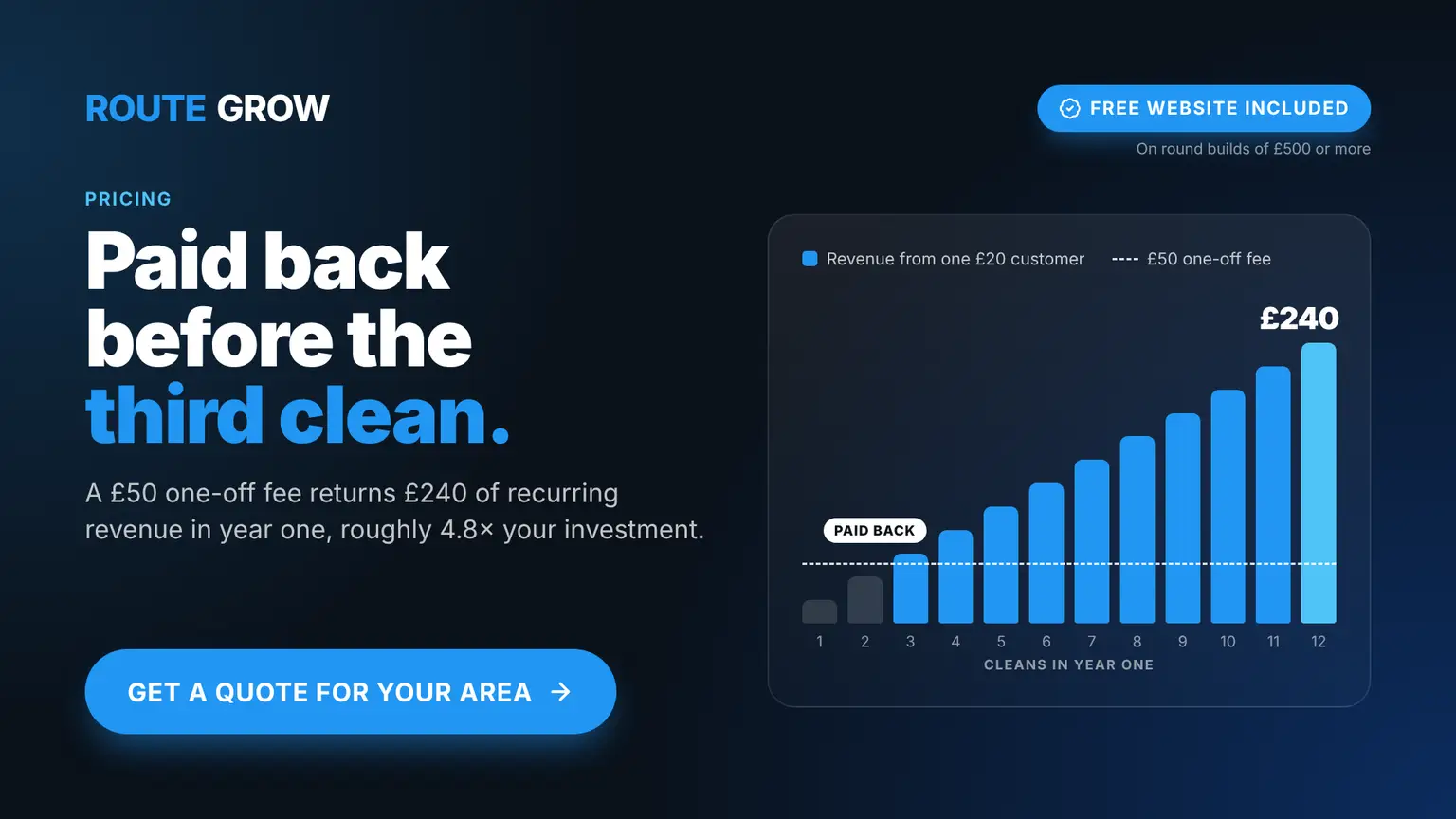
You should also compare acquisition cost with expected customer value. A customer paying regularly for several years can justify a sensible upfront cost. A customer who cancels after one clean cannot. The exact calculation depends on your price, frequency, overheads and retention, but the principle is simple: pay for growth that keeps earning.
Turn a new patch into a stronger round
Once you have several customers on one street, the area becomes easier to grow. Neighbours see you working there, householders talk and your route looks established rather than new. This is the point where local proof starts doing some of the selling for you.
Use that advantage professionally. Keep vans and uniforms tidy if you use them, be considerate around parked cars and leave each property looking cared for. You do not need flashy branding to benefit from visibility. Reliable work carried out regularly is often the best advert in a residential area.
When a round begins to fill, review it before accepting work farther out. It may be better to keep building depth in the same patch than to add a customer who pulls you into another town. Growth is most useful when it gives you more control of your week, not less.
The next good customer is not always the first person who says yes. It is the household that fits your route, accepts a fair price and becomes dependable repeat work for years to come.